Home  /  Aluminium windows  /  Noise reduction

Noise-reducing aluminium windows, and what to ask for in writing

Laminated glass, double glazing, seals and installation each change how much outside noise reaches a room. For homes on busy roads, near markets or next to a school.

THE HONEST ANSWER

A window can reduce noise. It cannot remove it.

We use the phrase noise-reducing on purpose. No window assembly shuts out all sound, and a reduction figure means little unless the test, the glass and the frame are named.
What you can do is choose glass, frame and installation that reduce the sound you are bothered by, and ask the supplier to put the build-up in writing. That is what this page covers.

Glass, frame, seals and the wall joint

AluK’s article on urban noise says laminated acoustic glass with double glazing is generally recommended, and that frame quality, seals and installation also matter. It describes the benefits qualitatively and gives no decibel figures, so we do not either.
Laminated glass bonds layers with an interlayer that holds the glass together when broken and reduces sound transmission compared with a single pane of the same thickness. Ratings such as STC (ASTM E90/E413) and Rw (ISO 717-1) are laboratory scores for a whole assembly. They are different scales and are not interchangeable. The AluK 56IW datasheet ties its acoustic rating to a named glass build-up, which shows the point: the number belongs to the assembly, not the frame.

Look inside the frame

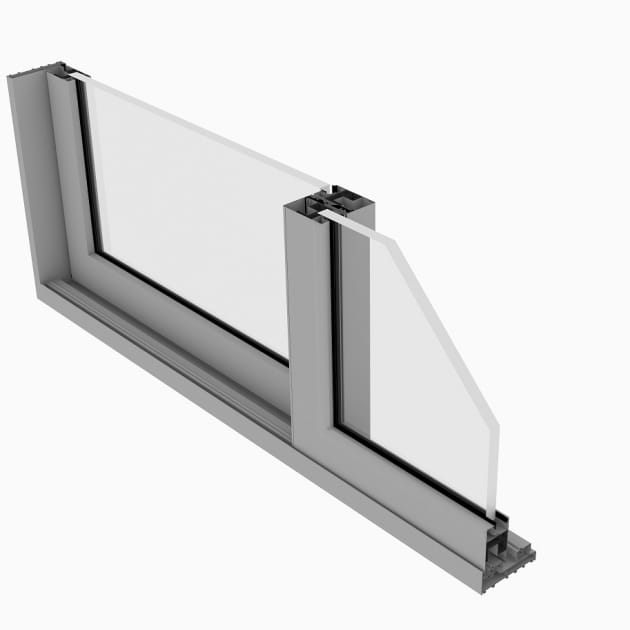
Cut sections of AluK systems show what you are actually buying: chamber layout, glazing pocket, track and threshold.

67IW thermally broken casement

A 67 mm thermally broken series for high thermal and acoustic performance, with burglary class RC2. AluK recommends it for replacing old wooden and PVC windows.
AluK S115NI sliding door cross section

S115NI sliding door

A sliding door for large glazing panels with safety and laminated glass options, up to 300 kg per sash, glass 28 to 36 mm.

Four choices that matter more than the brochure number

Pick the opening type

Casement sashes close onto a compression seal around the whole perimeter, which generally suits noise reduction better than a sliding sash that keeps brush seals engaged while moving. Both can be sealed well when installed correctly.

Think about ventilation

A sealed window is quiet only while closed. If the room needs air, plan how: a quiet vent, mechanical ventilation or air conditioning. Windows opened wide give up the noise benefit.

Use different glass thicknesses

Pairing panes of different thickness in one unit is a common approach, because the two panes resonate at different frequencies. Ask the glass supplier to specify the build-up for your noise source.

Seal the wall joint

Sound travels through gaps. Sealant and filler around the frame are as important as the glass, and are part of installation scope.

WHICH WINDOW

Choosing the frame for a noisy wall

For a bedroom on a busy road, we normally look first at a casement window with laminated double glazing and multi-point locking. If sliding is the only option because of space, see sliding windows and ask about track sealing. For openings that run to the floor, the casement door page explains the same logic.
Do not choose the frame by its slimness. A slim frame may be fine for noise, but the glass is what carries it, so the slimline page is for appearance, not acoustics.

What to ask any supplier

The test report for the assembly

Ask for the rating, the standard used (STC or Rw) and the exact glass and frame tested. A figure without those three is not usable.

The glass build-up in writing

Ask for the thickness of each pane, the interlayer and the cavity. Compare it with what is on the test report.

What is excluded

Ask what the rating does not cover: opened sashes, ventilation grilles and wall gaps.

Noise-reducing windows in the cities we serve

We can show glass samples and discuss your noise source at the Belagavi showroom; the local page is aluminium windows in Belagavi. For apartment projects in Bengaluru and Panaji, use the same checklist. Outside Belagavi, projects are arranged per project; confirm coverage with us.

From enquiry to a quieter room

Describe the noise

Tell us where the sound comes from and which rooms are affected. Call +91 89704 69999.

Review glass options

See glass samples and frame types at the showroom.

Measure and specify

We measure on site and write the glass build-up and sealing scope into the quotation.

Fabricate and install

Certified AluK Home partners fabricate. We install and seal the perimeter.

FAQ

Noise-reducing window questions

Sourced from AluK guidance and general acoustic references.
AluK’s guidance says laminated acoustic glass with double glazing is generally recommended, and that frame quality, seals and installation also decide the result. Double glazing alone may not be enough for strong traffic noise.
STC is a single-number laboratory rating of airborne sound reduction measured under ASTM E90/E413. Rw is the ISO 717-1 equivalent. They are not interchangeable, so always ask which one a figure is.
No window is. We offer noise-reducing glazing and tell you what to ask for in writing. We do not publish decibel numbers without a named test.
Yes. Continuous seals and a rigid frame help, and installation gaps let sound around the glass. Glass is the largest single factor.
It can reduce noise, but a casement that closes on a perimeter seal is usually preferred for noisy walls. We advise per opening.
You can operate full-size units and feel the seals. A showroom is not an acoustic lab, so rely on the test report for figures.

Related pages

Glass guide

Choosing glazing.

Casement windows

Gasketed hinged windows.

High-rise apartments

Urban living.

Request a quote

Share your project.

Tell us what you hear and where it comes from

Request a quote with photos of the wall, or visit the Tilakwadi showroom to see glass and frame samples.