Home  /  Guides  /  Aluminium vs wooden

Aluminium vs wooden windows in a monsoon climate

How timber and aluminium behave through four months of rain, what each one asks of you in upkeep, and the cases where wood is the better design decision.

THE SHORT ANSWER

Wood wins on warmth and tradition, aluminium wins on upkeep and span

A well-made, well-maintained wooden window can last a very long time. Wikipedia’s frame table notes that a maintained pre-1950 timber window can reach 50 to 100 years, and rates wood as having very good thermal resistance and variable durability. The same table rates aluminium as very low maintenance with good durability. The words that matter are ‘well-maintained’ and ‘variable’.
Our verdict: in Belagavi and Goa, where rain is heavy and nearly continuous from June to September, aluminium is the lower-effort choice for most openings, and it is the only sensible choice for wide sliding doors. Choose wood where the design brief calls for it, the elevation is sheltered, and the owner is willing to inspect and recoat on a schedule. We sell aluminium, so test our reasoning against the evidence below.

What monsoon exposure does to timber

The US Forest Products Laboratory ran long exposure tests on window units. Units that were painted and never repainted lost paint from exposed surfaces after 10 to 12 years. Untreated frames decayed badly, and one fell apart after 6 years. A water-repellent preservative treatment protected a unit very well after 20 years. The same laboratory notes that cracked paint films can trap moisture and that sun-exposed sills shorten paint life.
Those tests were not run in Goa, but the mechanism travels. Rain-exposed sills, end grain and joints are where moisture enters. In a four-month monsoon, a small crack in the finish at a sill has a long wet season to do damage. Wood holds up as long as someone keeps the finish intact, and skipping one cycle costs more in a wet climate.

See it in section

The systems discussed in this guide, cut away to show the profile.
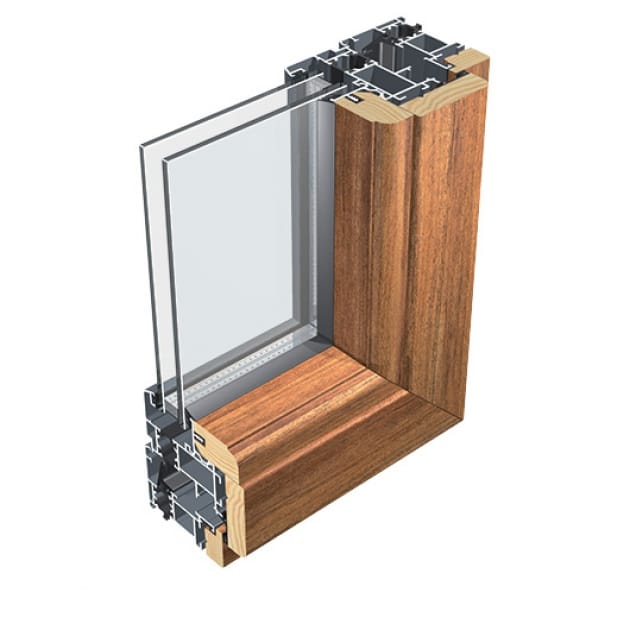
AluK 50IWOOD aluminium-wood window cross section

50IWOOD aluminium-wood window

A 50 mm window with an aluminium core outside and timber inside, in a choice of woods and colours.

67IW thermally broken casement

A 67 mm thermally broken series for high thermal and acoustic performance, with burglary class RC2. AluK recommends it for replacing old wooden and PVC windows.

What each material asks of you every year

AluK India states that aluminium frames need no repainting or revarnishing, and that washing with warm water and household detergent a few times a year is enough. Hardware needs light lubrication and drainage slots need to stay clear. Our window maintenance guide sets this out by season.
Wood asks for a recoating cycle, an annual look at sills and joints, and prompt repair of any chipped finish. Skipped maintenance on timber usually costs more than the recoating would have. If nobody in the household will own that job, or the house will be left empty for part of the year, that alone is a strong reason to choose aluminium.

SPAN, GLASS AND LOOK

Large glass, slim frames and the wood look

Timber frames get thick as spans and glass weight rise. Aluminium carries the same glass with a thinner frame: AluK’s Infineo sliding system has a 21 mm interlock and takes panels up to 3.5 m in height or width, and the folding system BSF70 has 97 mm sightlines. For a living-room wall of glass that difference is visible and structural. See aluminium sliding doors for how these are configured.
If what you want is the warmth of wood, there are two honest routes. Use timber on the elevations and rooms where it is sheltered, and aluminium on the exposed ones. Or ask about wood-effect powder-coated finishes in aluminium. We have not verified a wood-effect range within the AluK palette, so confirm it at the showroom and look at a sample in daylight. AluK India also lists an aluminium-wood thermal break casement line (50IWOOD); we have not reviewed its details, so ask for the datasheet.

Insulation depends on the glass and the seal

Wood is a good thermal insulator on its own. Aluminium needs a thermal break to match it, and the break is a polyamide strip between inner and outer aluminium shells. For the detail see our thermal break guide. In both materials, the glass build-up changes the result more than the frame does, particularly on west and south faces in a hot climate. The glass options guide explains SHGC and U-value in plain terms.
Noise follows the same logic. Laminated glass, mismatched pane thicknesses and a tight seal do the work. Frame material is secondary.

How to compare cost over the life of the window

Compare purchase price plus the cost of upkeep, not purchase price alone. For timber, add recoating every few years, sill and joint repairs, and the cost of scaffolding or access for upper floors. For aluminium, add periodic washing, hardware servicing and, near the sea, a more frequent rinse. Both sides depend on the finish and installation quality, which is why a written specification matters.
We do not quote a timber or aluminium price here because none we could verify is independent and like for like. Our price guide shows how aluminium quotations are built so you can request a comparable timber quote on the same basis.

CHECKS

Before you decide, check these four things

Exposure of each elevation

Rain-facing, sun-baked and sheltered faces age differently. A porch-protected timber window and an unprotected west window should not be given the same material by default.

Who recoats and when

Name the person and the interval. If the answer is ‘someone will do it’, treat that as a sign to lean towards aluminium.

Sill and drainage details

On either material, ask to see how water leaves the sill and where the end grain or weep slot sits. This detail matters more than the brand.

Equal glazing in both quotes

A wooden quote with single glass and an aluminium quote with double glass is not a material comparison. Equalise the glass first.

FAQ

Aluminium vs wood: common questions

Answers drawn from published exposure tests and manufacturer guidance.
Wood moves with moisture. Preservative treatment, a sound paint or varnish finish and intact sealing reduce the risk, and maintenance matters more in a wet climate. US Forest Products Laboratory tests found untreated frames decayed badly.
Wood-effect powder-coat finishes exist from several suppliers. Confirm what is available in the AluK palette at the showroom and judge a sample in daylight, because the look of printed finishes varies with the angle of light.
No. AluK India states aluminium frames need no repainting or revarnishing. A few washes a year with warm water and household detergent is the stated routine. Do not paint over a powder-coated finish.
Aluminium with a suitable coating and a rinse routine is the lower-maintenance option, because timber exposed to salt and rain needs frequent finish care. Ask for the finish class and certificate in writing.
Yes, as a bare material. A thermally broken aluminium frame narrows the gap, and the glass usually has a larger effect on room comfort than either frame.
Often yes. Where timber is a design decision and the owner commits to upkeep, it is a good answer. Use aluminium on the exposed or large openings and keep the timber where it is protected.

Related

Aluminium vs uPVC

Another comparison.

Renovations

Replacement windows.

Window prices

Cost factors.

Request a quote

Share your project.

See aluminium samples and finishes next to your timber references

Bring photos and sizes to the Tilakwadi showroom, or request a quote and we will compare on equal glass.